


46+
Years Of Experience
Stop Standing Water Before It Spreads
French Drain Systems in Hampton for Yards That Stay Flooded After Rain
Lee's Light Excavating and Rental installs French drain systems throughout Hampton for homeowners dealing with saturated lawns, pooling water near foundations, and soil that stays wet long after storms pass. When runoff from heavy rains has nowhere to go, it collects in low spots, kills grass roots, and creates muddy zones that make your yard unusable for days at a time.
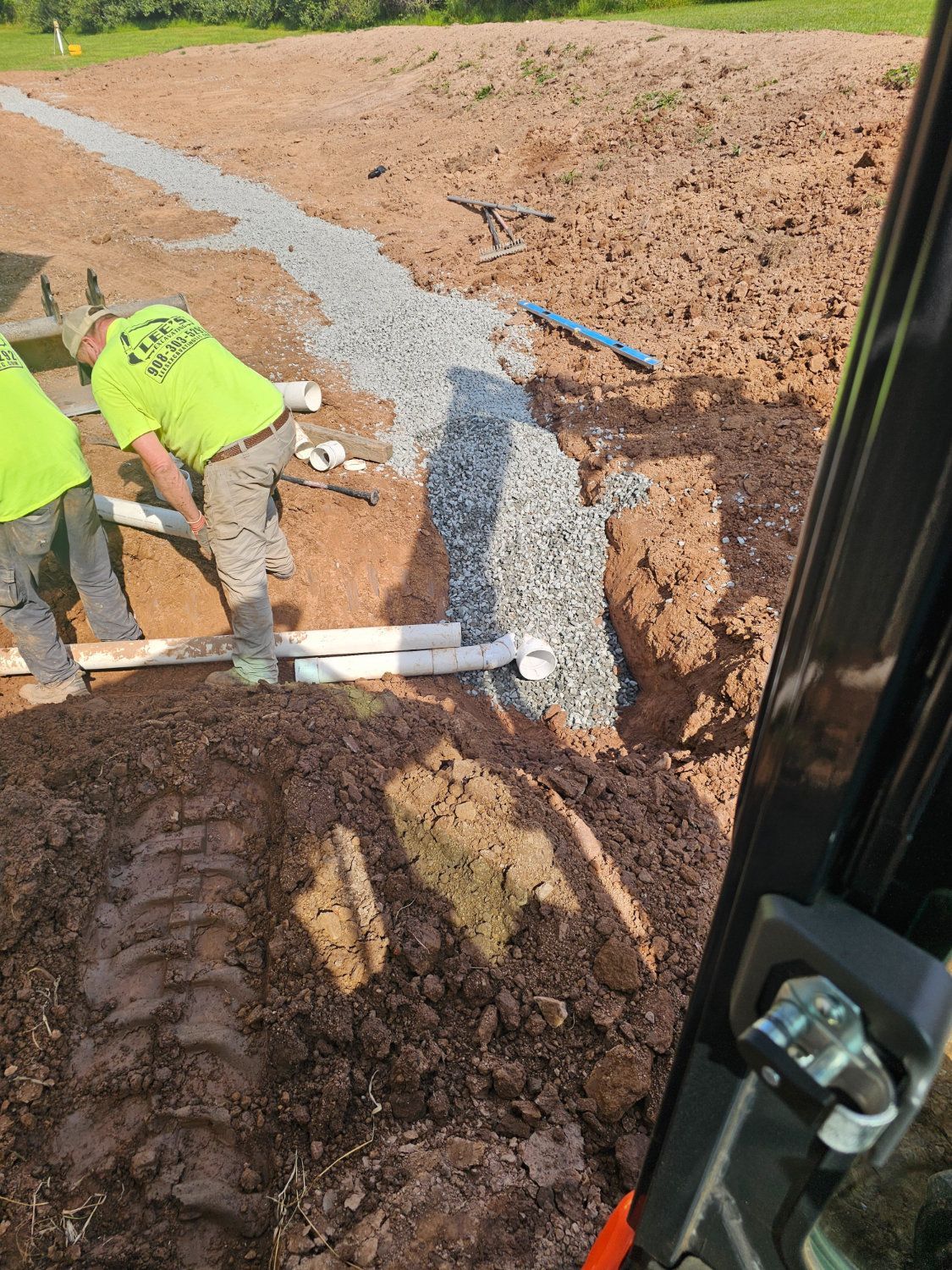
A French drain is a gravel-filled trench containing a perforated pipe that intercepts groundwater and surface runoff, then redirects it to a safe discharge area away from your home. The system works by collecting water as it moves downhill, channeling it through the buried pipe before it reaches problem zones like foundation walls, basement window wells, or flat sections of lawn. Installing one requires excavating a shallow trench along the path where water naturally flows, setting the pipe at a precise grade to maintain gravity flow, then backfilling with washed stone and filter fabric to prevent soil from clogging the perforations.
If water pools in your yard after every storm or you see erosion forming paths across your lawn, contact Lee's Light Excavating and Rental to assess your drainage needs in Hampton.
How the System Protects Your Property
Your French drain installation begins with mapping where water enters and where it needs to exit, whether that means routing flow toward a street curb, wooded edge, or dry well. Lee's Light Excavating and Rental uses laser levels to confirm the trench maintains a consistent downhill slope, typically one inch per eight feet, so gravity keeps water moving without pumps or mechanical assistance. The perforated pipe sits on a bed of clean stone, wrapped in geotextile fabric that filters out silt while allowing water to pass freely into the pipe openings.
Once the system is buried and operational, you will notice that areas that used to hold water for two or three days after rainfall now drain within hours, leaving firm soil that supports foot traffic and healthy turf growth. Grass stops turning yellow from root rot, and you no longer see muddy trails forming across the yard every time it rains hard.
The stone backfill remains stable underground for decades, and the pipe will not collapse under normal soil pressure. Maintenance involves keeping the outlet clear of leaves or debris and checking that the discharge point has not silted over, which takes only a few minutes once or twice per year. The system does not address roof runoff unless you connect downspouts to the drain line, and it will not solve water problems caused by underground springs without additional site work.
Common Questions About French Drain Installation
Homeowners in Hampton often ask how deep the trench needs to be, where the water will drain, and how long the installation takes depending on yard size and soil conditions.
How deep does the trench need to be for a French drain?
Most residential French drains are installed between 18 and 24 inches deep, which places the pipe below the root zone of grass and shallow plantings while staying above utility lines. Depth varies based on where the water needs to discharge and the elevation change across your yard.
What happens to the water once it enters the drain?
Water flows through the perforated pipe by gravity and exits at a daylight outlet, drywell, or connection to a storm sewer depending on your lot layout and local codes. You will see the water leave your property during rainfall instead of pooling where it used to collect.
How long does installation take on a typical yard?
Most single-line French drains are completed in one to two days, depending on trench length, soil type, and access for equipment. Rocky soil or areas with tree roots take longer to excavate than sandy or loamy ground.
What kind of stone is used in the trench?
The trench is backfilled with washed, angular stone, typically three-quarter inch crushed gravel, which creates void space for water to flow while resisting compaction over time. This stone does not break down or mix with surrounding soil the way rounded river rock would.
Why does water still pool in some spots after a drain is installed?
If water continues to collect, the drain may not extend far enough to intercept all the runoff, or a separate high point may be feeding water from another direction. Adding a second branch line or adjusting the trench route usually resolves the issue.
If water continues to collect, the drain may not extend far enough to intercept all the runoff, or a separate high point may be feeding water from another direction. Adding a second branch line or adjusting the trench route usually resolves the issue.